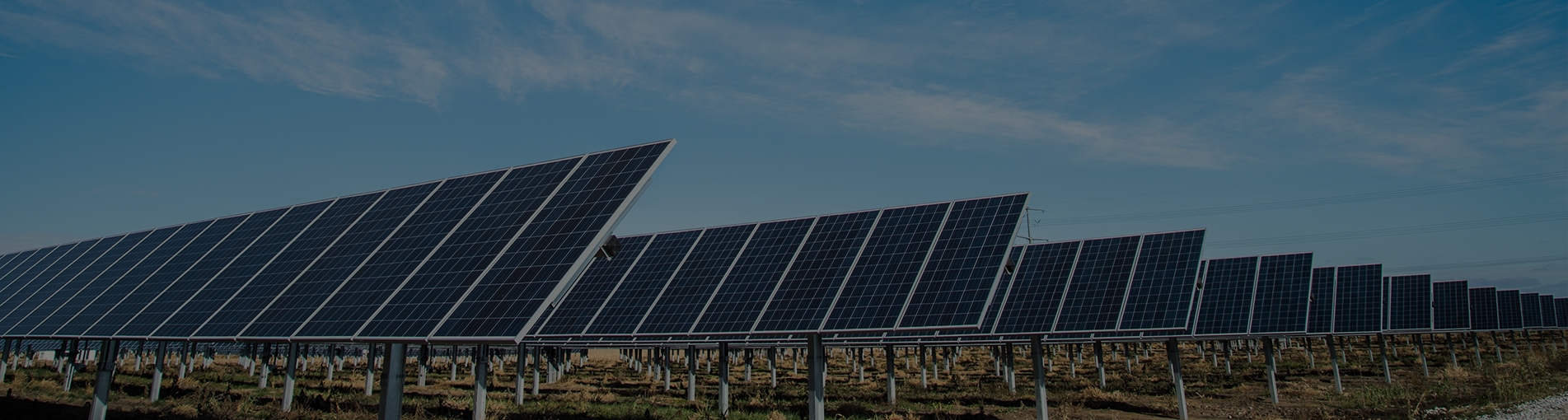
As utility-scale solar installations grow larger and more complex, the difference between a profitable plant and an underperforming one often comes down to the intelligence of the tracking system. At GF New Energy, our solar tracker controller (TCU) and Network control unit (NCU) are engineered to work as a unified architecture — one that doesn't just track the sun, but continuously optimizes energy capture across an entire solar field. In this article, we break down how the TCU-NCU integration translates into measurable gains in energy yield and long-term ROI.
Each GF-S-V2 (DC-powered) and GF-AC-V2 (AC-powered) solar tracker controller is the brain behind a single tracking row. Both models share a dual-algorithm architecture that combines astronomical tracking with backtracking optimization.
The astronomical algorithm calculates the sun's position in real time based on the tracker's GPS coordinates, date, and time. This ensures that panels maintain an optimal tilt angle relative to the sun throughout the day, maximizing direct beam irradiance on the module surface. With a tracking accuracy of ±1°, the GF controller keeps every row aligned with the sun from sunrise to sunset — a level of precision that directly translates into higher energy harvest during early morning and late afternoon hours when fixed-tilt systems are at their least efficient.
In utility-scale plants with multiple tracker rows packed closely together, morning and afternoon sun angles can cause one row to cast shadows on adjacent rows — a phenomenon known as inter-row shading. The backtracking algorithm solves this by computing the optimal angle that avoids shading neighboring rows, even if that means the tracker doesn't face the sun directly during low-angle periods. The result: the total energy captured across the entire solar field is higher than if each row independently tracked the sun without coordination.
By combining both algorithms, the GF TCU ensures that each row produces the maximum possible energy while also maximizing the field-level output — two objectives that would conflict without intelligent control logic.
While the TCU handles row-level tracking, the GF Network control unit (NCU-V1) serves as the central nervous system of the solar plant. One NCU can manage up to 120 TCUs simultaneously, creating a hierarchical control architecture that is both scalable and resilient.
The NCU continuously collects operational data from every connected TCU — including motor position, power consumption, fault status, and tracking accuracy — and relays this information to the plant's SCADA system or cloud monitoring platform. This real-time visibility allows operators to:
The NCU integrates environmental sensors for wind speed and direction, rain, snow, and flood conditions. When sensor data exceeds configurable safety thresholds, the NCU can automatically command all connected TCUs to enter a protective stow position — typically a horizontal or near-horizontal angle that minimizes wind load on the panels and structure. This automated response protects the plant's physical assets without requiring human intervention, which is critical during sudden weather events at remote sites.
One of the most critical design decisions in solar tracker architecture is the co
mmunication backbone. GF's system uses a dual-communication strategy that provides redundancy and flexibility:
| Link | Protocol | Advantage |
|---|---|---|
| NCU ↔ TCU | LoRa wireless + RS485 | Wireless reduces cable costs and installation time; RS485 provides wired backup for critical installations |
| NCU ↔ SCADA / Cloud | Ethernet + 4G + RS485 | Multiple uplink options ensure connectivity even in remote areas with limited infrastructure |
The LoRa wireless communication between NCU and TCUs is particularly impactful for plant economics. By eliminating the need for thousands of meters of communication cabling across the solar field, LoRa significantly reduces:
When the TCU-NCU architecture operates as designed, the cumulative effect on plant-level energy yield is substantial:
| Factor | Mechanism | Typical Yield Gain vs. Fixed-Tilt |
|---|---|---|
| Astronomical tracking | Maintains optimal tilt to sun throughout daylight hours | +15–25% |
| Backtracking optimization | Eliminates inter-row shading at low sun angles | +2–5% (field-level) |
| Remote fault detection | NCU identifies non-tracking rows within minutes | Reduces undetected downtime by 80%+ |
| Automated stow protection | Prevents structural damage during storms | Avoids catastrophic asset loss |
For a 100 MW utility-scale plant, even a 1% improvement in energy yield can represent hundreds of thousands of dollars in additional annual revenue. The GF TCU-NCU system is designed to capture gains across all four factors above — not just tracking, but the operational intelligence that keeps every row producing at its full potential.
The NCU's uplink to GF's cloud monitoring platform extends visibility beyond the physical plant boundary. Asset managers and O&M teams can access real-time and historical data from any internet-connected device, enabling:
All GF tracker controllers and the NCU are rated to IP65 for dust and water ingress protection, with operating temperature ranges from -40°C to 60°C (the GF-S-V2 covers -20°C to 60°C, with a low-temperature version available for extreme cold climates). Every unit undergoes 100% aging testing, functional testing, and complete performance inspection before shipment, and carries CE certification for compliance with European safety and electromagnetic compatibility standards.
This combination of physical robustness and intelligent control means the system doesn't just perform well on day one — it maintains that performance across the 25-30 year lifetime of a typical utility-scale solar project, which is where the real LCOE (Levelized Cost of Energy) advantages accumulate.
In the competitive utility-scale solar market, where every cent per kilowatt-hour matters, the tracking system architecture is not a commodity component — it is a strategic investment. GF New Energy's TCU-NCU architecture is designed from the ground up to maximize energy yield at both the row level and the plant level, reduce installation and O&M costs through wireless communication and cloud intelligence, and protect physical assets through automated environmental response.
For plant developers and EPCs evaluating tracker control systems, the question isn't just "does it track the sun?" — it's "does the system architecture maximize total lifetime energy yield?" With GF's integrated TCU and NCU, the answer is engineered into every component.
About GF New Energy Technologies
Founded in 2013, Henan GF New Energy Technologies Co., Ltd. specializes in high-quality solar tracker components for global manufacturers. With products deployed in over 37 countries and CE-certified controllers trusted by EPCs worldwide, GF delivers one-stop solutions including solar tracker controllers (TCU), Network control units (NCU), bearings, and dampers — all backed by patented technologies and a dedicated after-sales support team.
Contact us: info@gfnewenergy.com | View our products
CONTACT_________