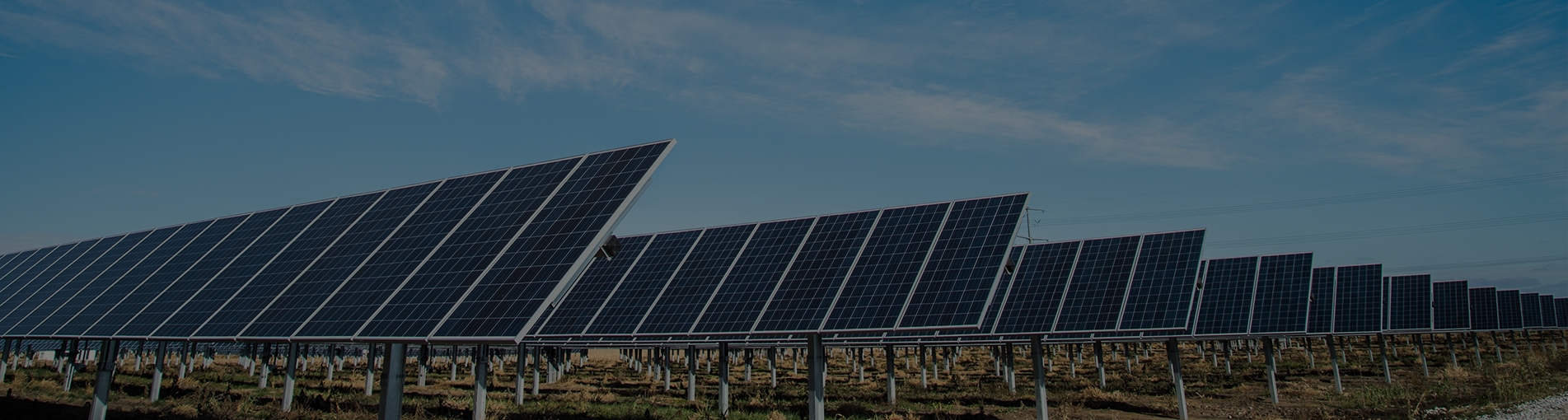
This is not a story about cells. It is a story about what happens downstream when the module — the single most consequential component in a solar plant — changes its fundamental electrical and optical characteristics. While most industry analysis has focused on cell efficiency numbers and manufacturing economics, a quieter but equally important question has received far less attention: what does the TOPCon transition mean for the tracking systems that carry these new modules?
The answer, as utility-scale plants commissioned in 2025-2026 are now demonstrating, is that tracker design assumptions optimized for PERC are no longer optimal for TOPCon. The shift affects everything from ground coverage ratio to torque tube sizing to the very algorithms that control panel positioning.
TOPCon (Tunnel Oxide Passivated Contact) cells use n-type silicon with an ultra-thin tunnel oxide layer that dramatically reduces recombination losses at metal contacts. The result is higher efficiency (25.7% mass production vs PERC's 23.5%) and lower degradation (1.0% first-year vs PERC's 2.0%; 0.40%/year vs 0.55%/year). Over a 25-year project life, a TOPCon module retains roughly 89% of nameplate output compared to PERC's ~84%.
But for tracker engineers, three specific TOPCon characteristics matter more than the headline efficiency:
TOPCon bifacial modules typically achieve a bifaciality factor of 75-80% — meaning the rear side generates 75-80% of the front side's output under equivalent irradiance. PERC bifacial modules generally topped out at 65-70%. This 10-15 percentage point improvement in rear-side generation fundamentally changes the economics of albedo capture, which is where tracker design becomes critical.
TOPCon production lines are optimized for larger wafer sizes (M10 182mm and G12 210mm) and higher cell counts per module (72-cell to 108-cell and beyond in rectangular formats). A typical 2026 utility-scale TOPCon module measures significantly larger and heavier than the 72-cell PERC modules that dominated 2020-2023 procurements. This means higher wind loads on the tracker structure and greater torque requirements on the drive system.
TOPCon's temperature coefficient (power loss per degree above 25°C) is approximately -0.29%/°C compared to PERC's -0.35%/°C. In hot-climate utility-scale plants where module temperatures regularly exceed 55°C, TOPCon generates measurably more power during peak afternoon hours. This shifts the daily energy production curve — and with it, the optimal tracking strategy.
Each of these TOPCon characteristics creates a specific design pressure on the tracking system:
With PERC bifacial modules at 65-70% bifaciality, tracker designers had to balance two competing objectives: pack rows closely (high GCR) to minimize land use, or space them wider (low GCR) to allow more rear-side irradiance through. The optimal compromise for PERC typically landed at a GCR of 40-50%.
TOPCon's higher bifaciality shifts this calculation. Each percentage point of bifaciality gain makes rear-side capture more valuable, which means the GCR that maximizes total energy yield (front + rear) is slightly lower than the PERC-optimal value. Plants designed for TOPCon are increasingly specifying GCRs of 35-45% — wider row spacing, more land per megawatt, but 2-4% more total energy captured over the project life.
For existing tracker controllers, this means the backtracking algorithm parameters — which calculate the optimal angle to avoid inter-row shading based on row spacing and tracker height — need recalibration. A backtracking curve tuned for PERC at GCR 50% will suboptimally position TOPCon modules at GCR 40%, leaving energy on the table during morning and afternoon hours.
The shift to larger, heavier TOPCon modules increases the static and dynamic loads on tracker drive systems. A 108-cell rectangular TOPCon module can weigh 20-30% more than the 72-cell PERC modules that were the tracker industry's design baseline. For single-axis trackers with 90+ modules per row, this adds hundreds of kilograms of additional loading — not enough to require a complete structural redesign, but enough to affect:
Tracker manufacturers that haven't re-rated their structural and drive specifications for TOPCon module weights risk both under-engineering (failure risk) and over-engineering (unnecessary cost).
This creates an opportunity for tracking algorithms that are albedo-aware rather than purely sun-position-driven. Traditional astronomical tracking maximizes front-side irradiance by pointing panels at the sun. But in the morning and afternoon, when the sun is low and front-side irradiance is weak, the optimal angle for maximizing total (front + rear) energy may differ from the angle that maximizes front-side energy alone. A tracker that tilts slightly toward the high-albedo ground surface during low-sun-angle periods can capture more rear-side energy than one rigidly following the solar azimuth.
This is not a new concept — albedo-aware tracking has been discussed in academic literature for years. But TOPCon's higher bifaciality is the factor that moves it from theoretical curiosity to economically worthwhile optimization. For a 100 MW plant, a 1% gain from albedo-aware tracking represents $40,000-60,000 per year in additional revenue at current PPA rates.
TOPCon's lower degradation rate (0.40%/year vs PERC's 0.55%) has a subtle but important implication for tracker economics. Over 25 years, a TOPCon module retains approximately 5 percentage points more of its nameplate output than a PERC module. This means the energy-producing life of the modules extends further before replacement becomes economically justified.
Tracker structures are typically designed for a 25-30 year life. But the electronics inside the tracker controller — capacitors, sensors, communication modules — have historically been the limiting factor in controller longevity, with typical design lives of 10-15 years before refurbishment. As modules last longer and produce more energy in their later years, the economic case for longer-lived controller electronics strengthens. A controller that must be replaced at year 15 negates some of TOPCon's year-15-to-25 yield advantage.
This is pushing the industry toward more robust controller designs: higher-grade capacitors, conformal-coated PCBs for humidity resistance, and firmware architectures that can receive remote updates over 15+ year lifespans without hardware replacement.
The TOPCon transition is a case study in a broader truth about the solar industry: component-level technology changes ripple through the entire system. A 10-percentage-point increase in bifaciality sounds like a module specification detail. But it changes the optimal row spacing, which changes the backtracking parameters, which changes the tracking algorithm, which changes the energy yield, which changes the project economics.
For EPCs and plant developers, the practical implication is that tracker specifications should be evaluated against the specific module technology being procured, not against generic assumptions. A tracker optimized for PERC at GCR 50% is not the same as a tracker optimized for TOPCon at GCR 40% — even if the mechanical structure is identical. The difference lives in the controller's algorithm parameters, the drive system sizing, and the structural wind-load ratings.
As the industry looks ahead to HJT (11% market share in 2026, potentially 25-30% by 2028) and eventually perovskite-silicon tandem cells (34%+ lab efficiency, first commercial modules expected 2027-2028), this cycle of module-technology-driven tracker re-optimization will only accelerate. The trackers that deliver the most lifetime energy will be those whose controllers can be re-parameterized as module technology evolves — not those locked into the assumptions of the modules available at the time of installation.
The TOPCon transition is the solar industry's fastest cell-technology shift, and it is far from over. As module efficiency, bifaciality, and format continue to evolve, the tracking systems that carry these modules must evolve in parallel — not just mechanically, but algorithmically. The trackers that capture the most value from the TOPCon era will be those whose controllers can adapt their tracking strategy to the specific optical and electrical characteristics of the modules they carry.
At GF New Energy, we view this as a core engineering principle: the controller must understand the module. Our dual-algorithm architecture (astronomical + backtracking) is designed to be parameterized for the specific module technology, GCR, and site conditions of each project — not locked to the assumptions of a previous generation. As the industry moves through TOPCon, toward HJT, and eventually to tandem cells, this adaptability is what will keep tracking systems delivering maximum yield across the full 25-30 year project life.
Founded in 2013, Henan GF New Energy Technologies Co., Ltd. specializes in high-quality solar tracker components for global manufacturers. With products deployed in over 37 countries and CE-certified controllers trusted by EPCs worldwide, GF delivers one-stop solutions including solar tracker controllers (TCU), Network control units (NCU), bearings, and dampers — all backed by patented technologies and a dedicated after-sales support team.
Contact: info@gfnewenergy.com | Products: View our solutions
CONTACT_________